This question gets asked constantly, and the honest answer is: it depends on what the hair actually is, not what it's labeled. Coloring extensions is one of the fastest ways to expose hair that was never built for it.
Why coloring exposes hair quality fast
Natural hair on a client's head is constantly nourished by the scalp. Extension hair has no such supply line — whatever structural integrity it has is whatever it arrived with. Color processing, especially lift, is the most stressful thing you can do to hair, and extension hair has zero capacity to recover or regenerate between now and the next appointment.
The rule that actually matters
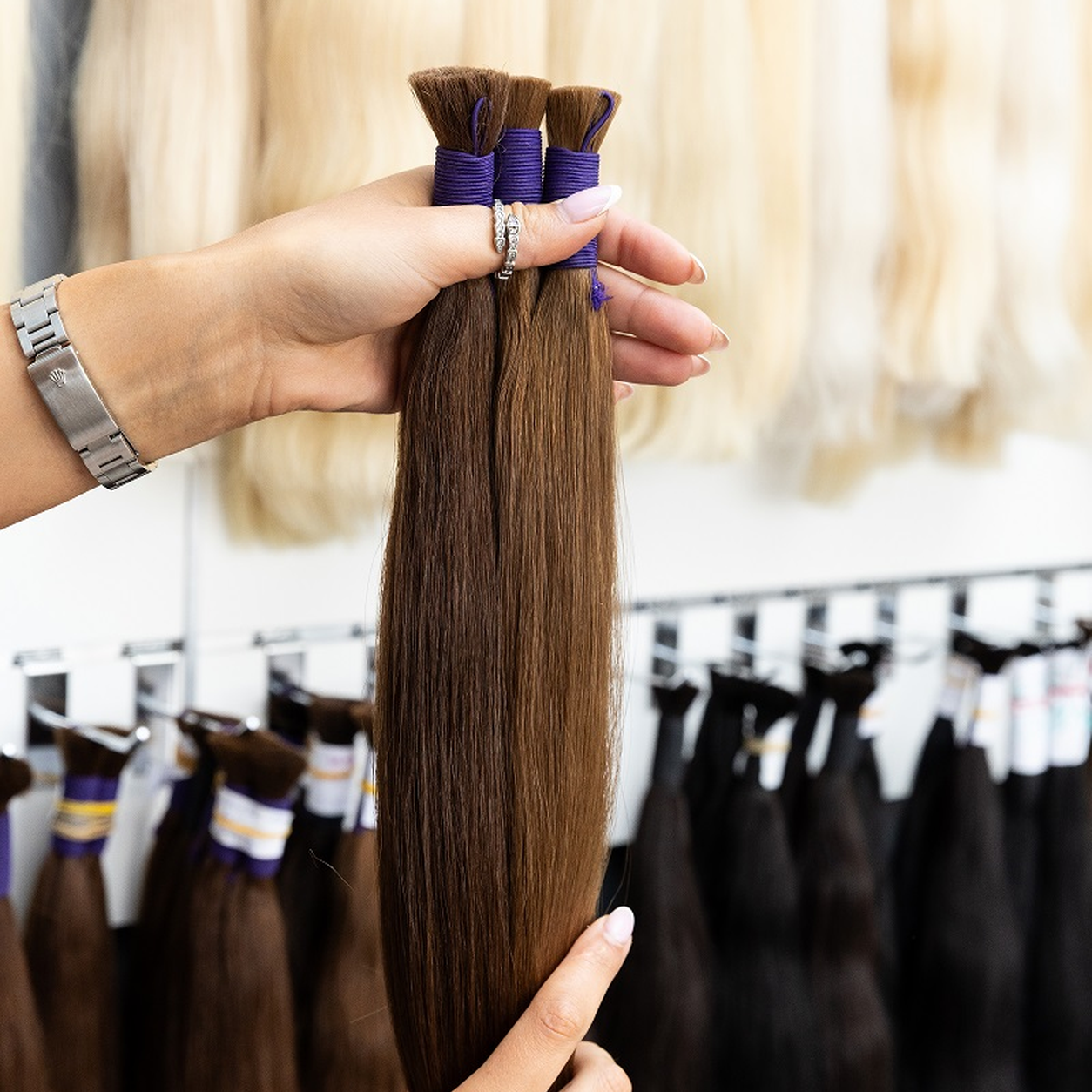
Only full-cuticle, virgin or high-grade Remy hair should be colored, and only by a professional who understands extension hair behaves differently from a client's natural growth. Heavily processed or non-Remy hair has typically already absorbed significant chemical stress during manufacturing — asking it to take another color process on top of that is asking for breakage, uneven tone, or a complete loss of structural integrity.
What to check before you ever pick up a color bowl
- Origin and processing history. If you don't know whether the hair was virgin or already chemically processed before sale, do a strand test before committing the full set.
- Porosity. Extension hair that absorbs water unusually fast is signaling compromised cuticle — a red flag for color work.
- Existing tone depth. Lifting hair that's already been through prior processing compounds damage faster than lifting truly virgin hair.
Why this is a sales opportunity, not just a risk warning
Clients who want custom color-matched extensions are exactly the clients willing to pay for quality hair — they understand they're commissioning something, not buying off a shelf. Position virgin hair's colorability as the premium feature it is, rather than burying it as a technical caveat.