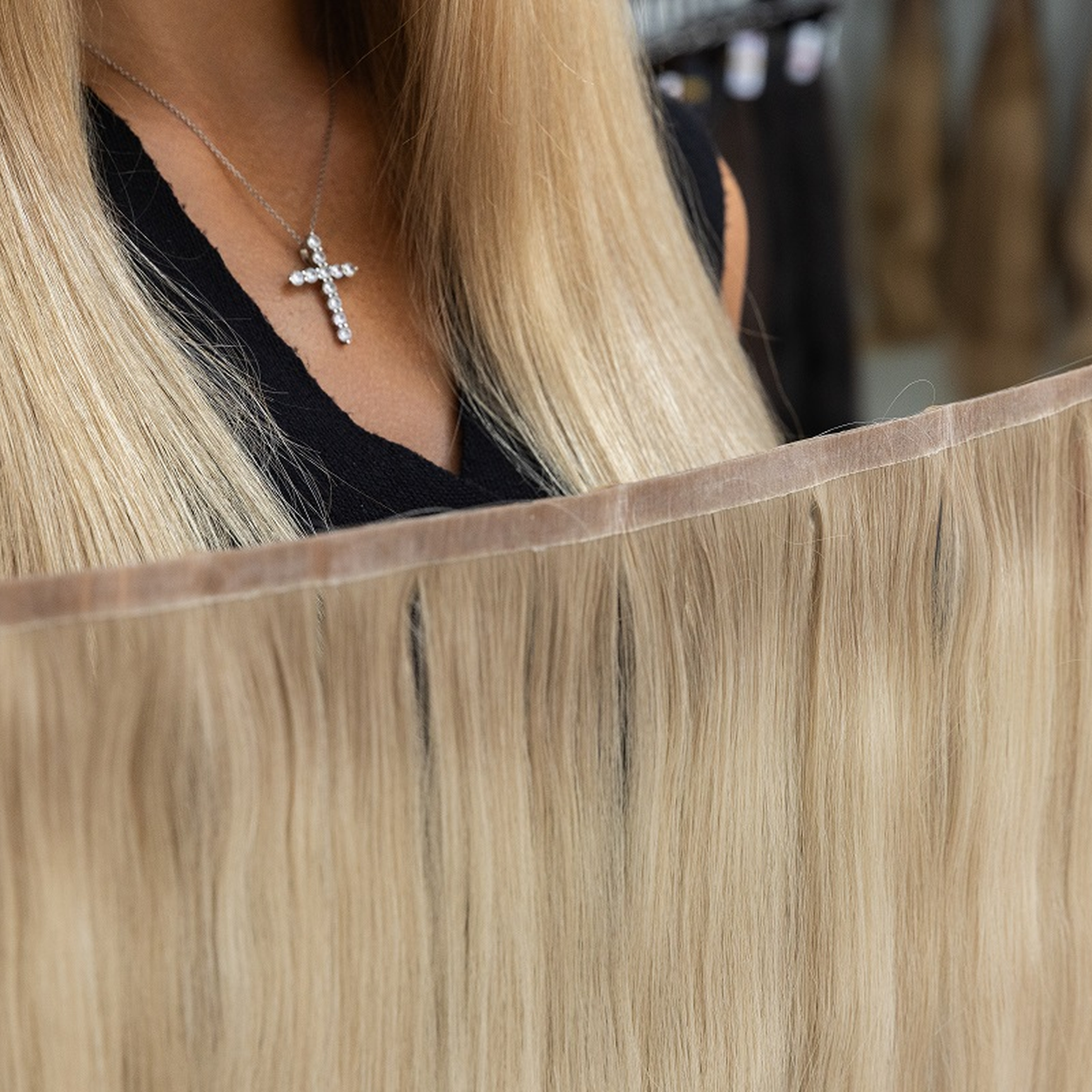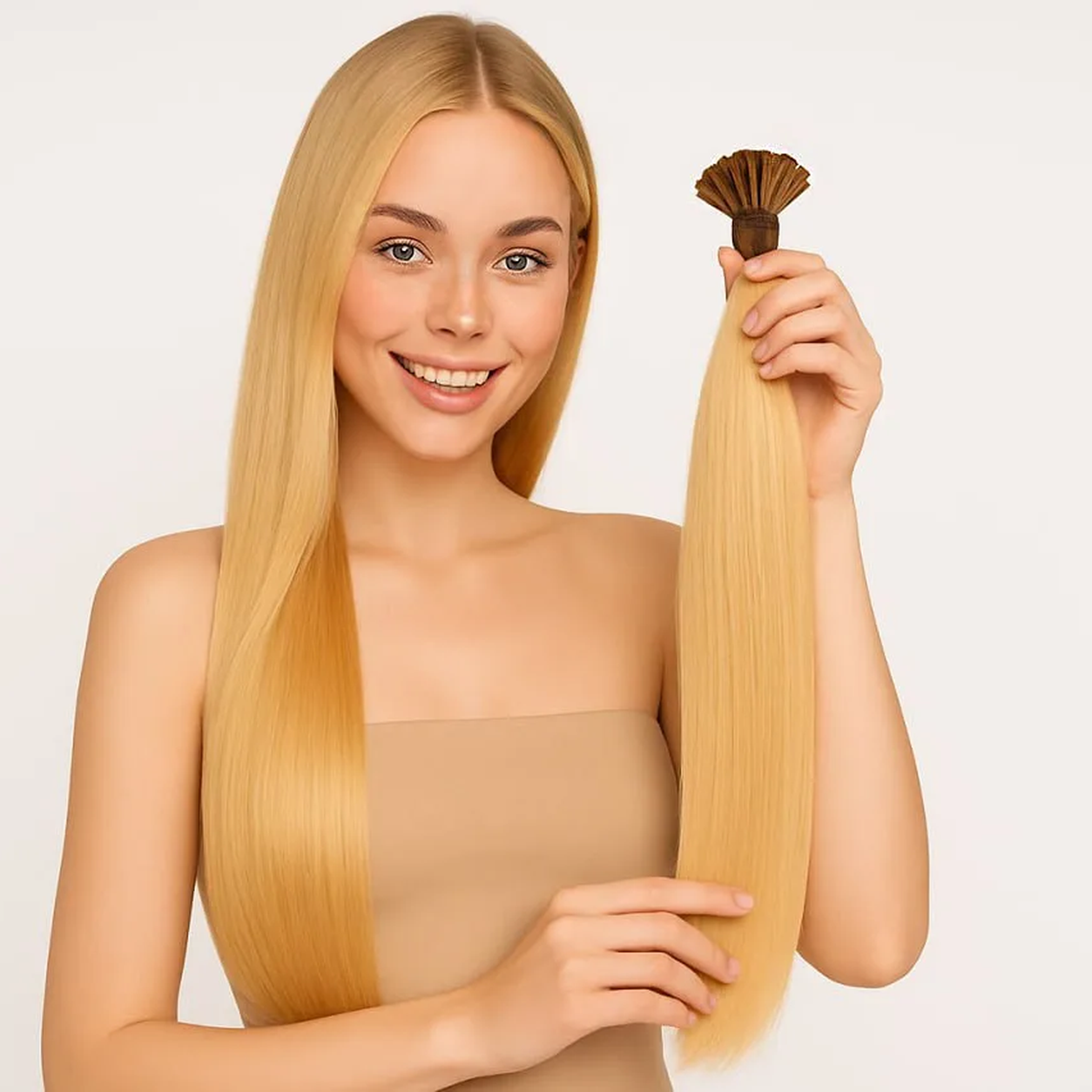
Since extensions boomed, so did the vague terminology used to sell them. "Human hair" tells you almost nothing about how the hair will perform after two weeks in the real world. The word that matters is cuticle.
What the cuticle does
The cuticle is the outer layer of the hair shaft — overlapping scales that all point the same direction, from root to tip. When those scales are intact and aligned, hair lies flat, reflects light evenly, and resists tangling. When they're not, the strands catch on each other and mat.
Full-cuticle Remy vs. processed
In full-cuticle Remy hair the cuticle is intact and aligned in one direction. It makes an excellent first impression and holds up after washing, lasts long with proper care, and colors like natural hair. Processed "human hair" has had the cuticle stripped and then silicone-coated. It also looks good at first — because the coating masks it — but tangles, dulls, and mats as that coating wears off, has a short lifespan, and colors unpredictably.
How to verify what you're buying
- Ask the direct question. "Is this full-cuticle Remy, cuticle-aligned?" A supplier who understands their material answers instantly and specifically.
- Test past the first wash. Quality shows after several washes, not in the package. Reputable hair holds its texture; coated hair reveals itself.
- Watch the terminology. "Virgin" and "Raw" mean unprocessed hair from a single donor; "Remy" means cuticles intact and aligned. Vague catch-all terms are a flag.
Why it's a reputation issue, not just a quality one
The hair you install is tied directly to your name. A client whose extensions tangle or dull after two weeks isn't coming back — and she's telling people why. Sourcing full-cuticle hair isn't about being fussy; it's about protecting the business you've built.