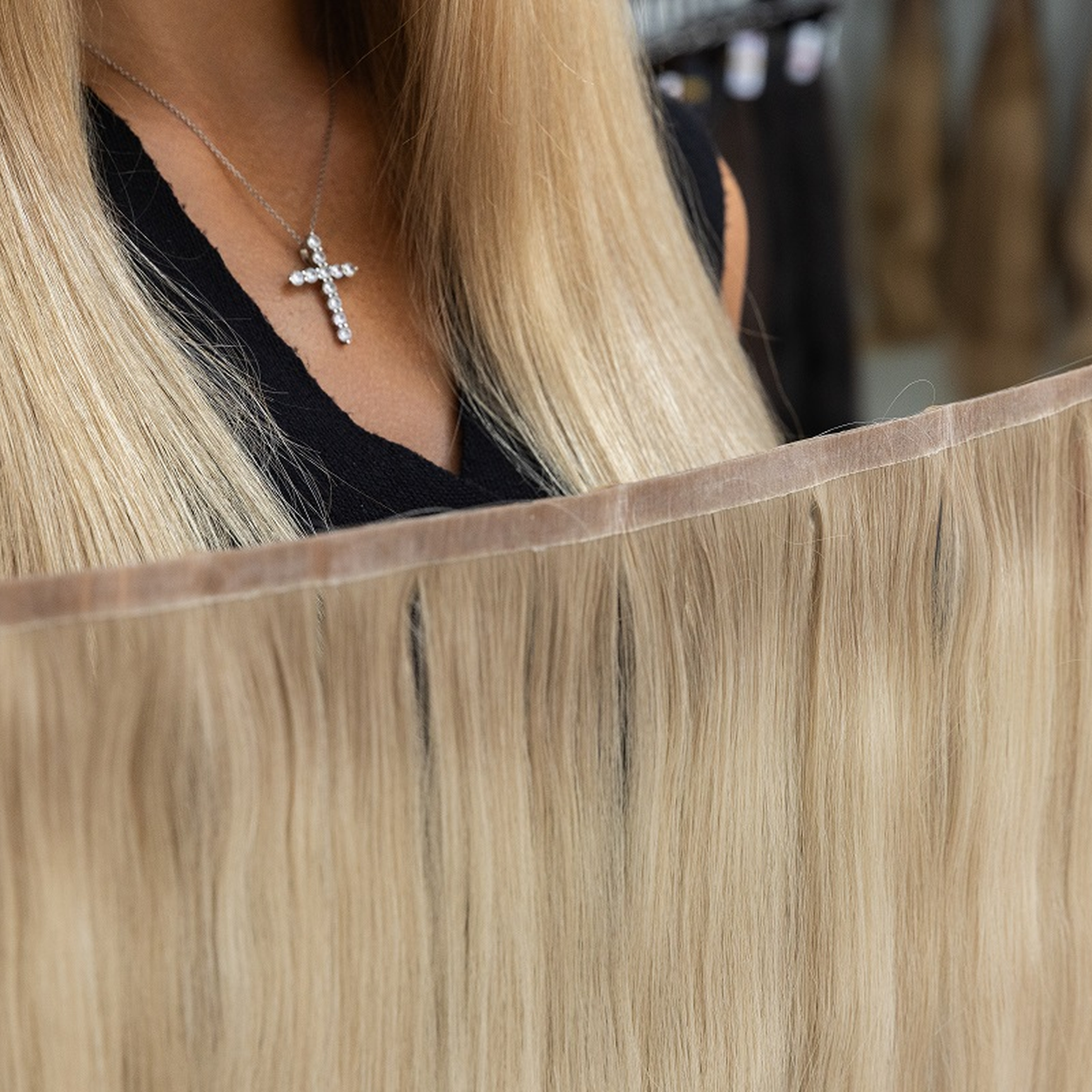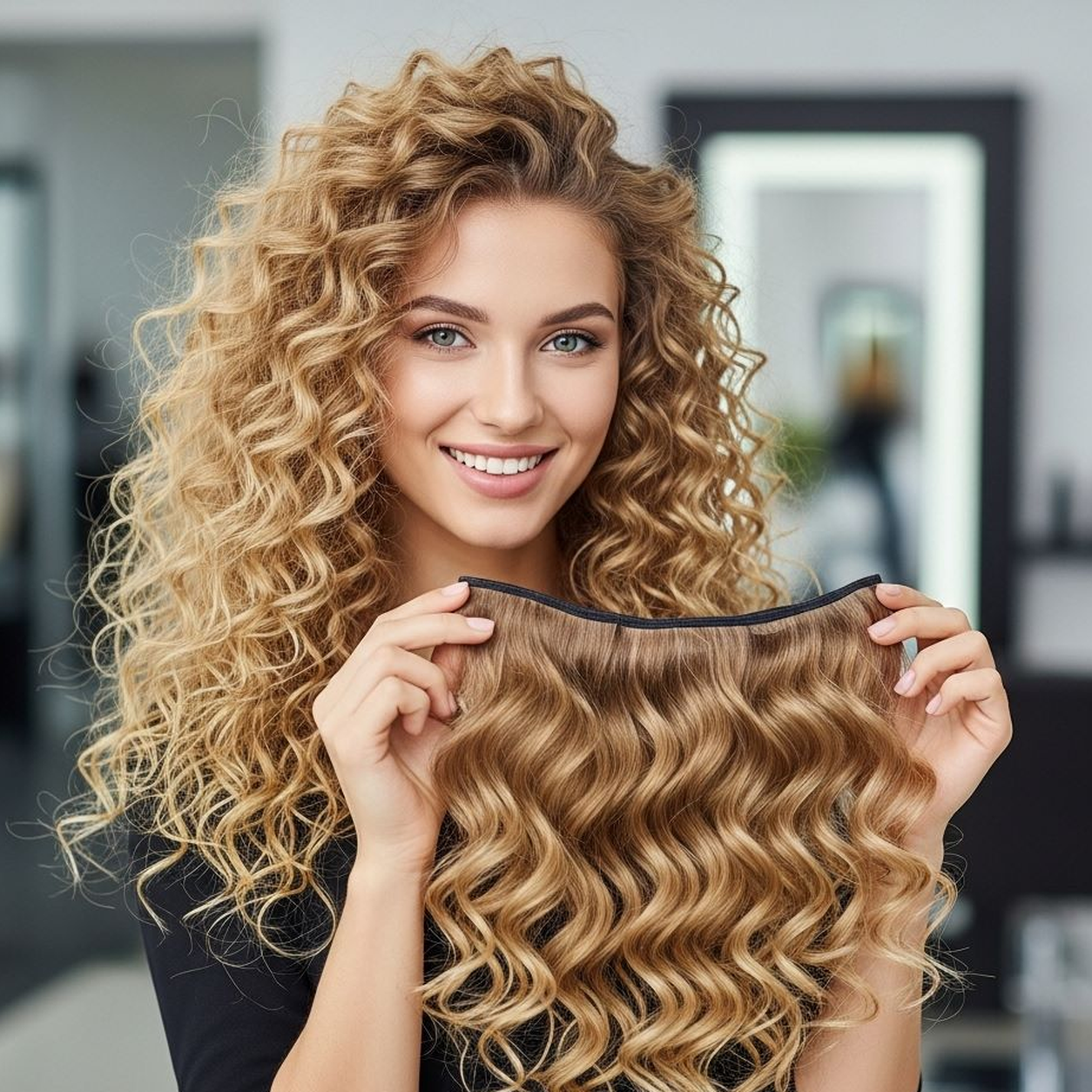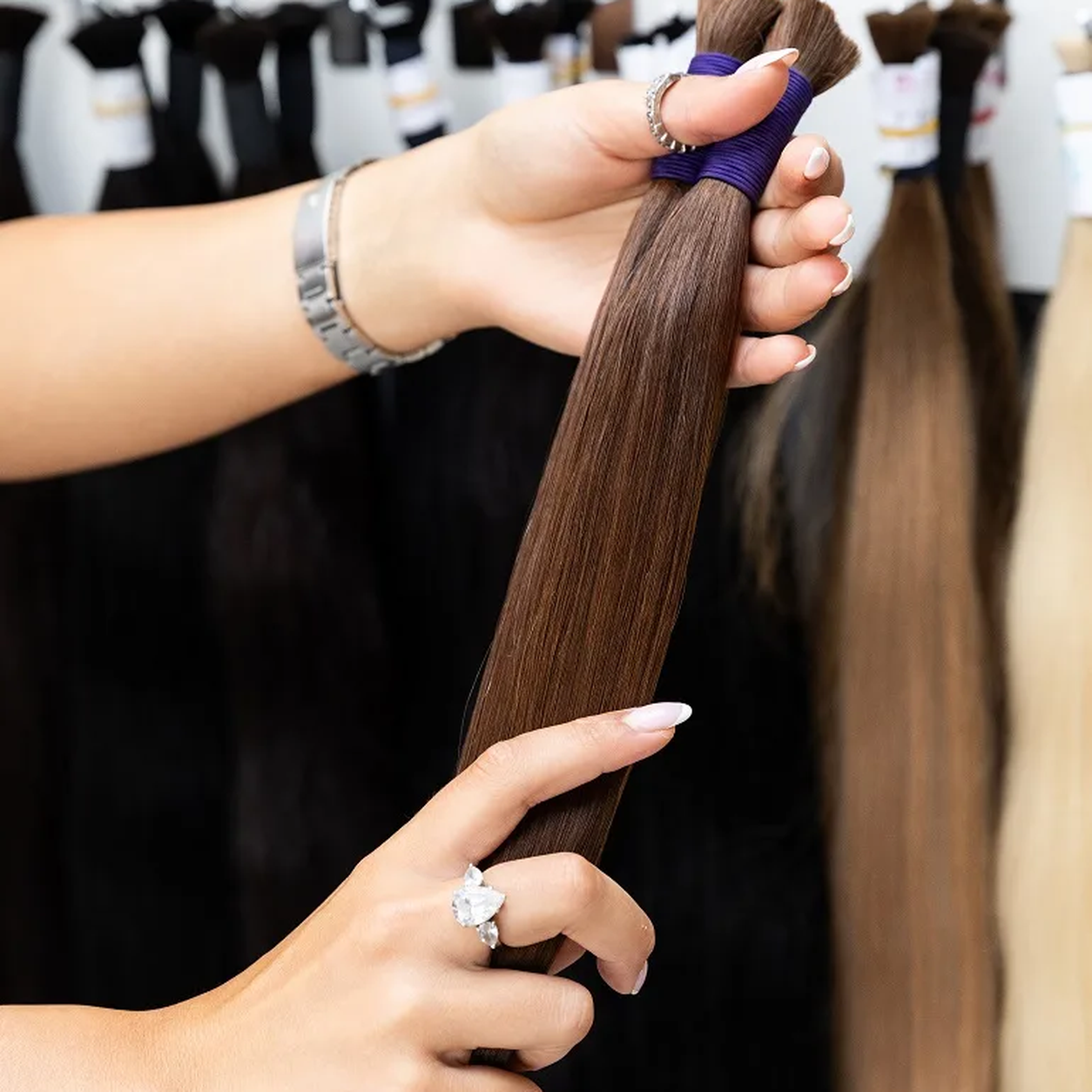
When a stylist talks about extensions that "disappear," they're describing a blend so clean the client's own hair and the added hair read as one. On fine or light-textured hair, that outcome depends heavily on origin — and it's structural, not a matter of branding.
Blending is about diameter, not just color
Stylists match color instinctively, but texture and strand diameter matter just as much. If the extension hair is coarser than the natural hair, it sits differently, moves differently, and creates a detectable line no matter how good the color match is. The blend fails at the level of the individual strand.
Why Slavic and Russian hair fits fine hair
Hair from Slavic and Russian donors is characteristically fine in diameter and soft in texture. That fineness is exactly what lets it merge into fine and light natural hair — the added strands are structurally similar to the client's own, so the eye and the hand can't find the seam.
Matching origin to the client
For fine or light-textured natural hair, Slavic and Russian hair blends most seamlessly. For medium to thick hair you have more latitude, but a texture match still improves the result. The universal rule is to match the extension texture to the natural hair first, then match color — doing it in that order is what makes an install invisible.
Why this is a quality signal, not a gimmick
Fine, cuticle-aligned Slavic hair is prized precisely because the blend it produces is hard to achieve with coarser, heavily processed alternatives. For a stylist whose reputation rests on installs that look like the client's own hair, origin is a technical decision — not a luxury label.