
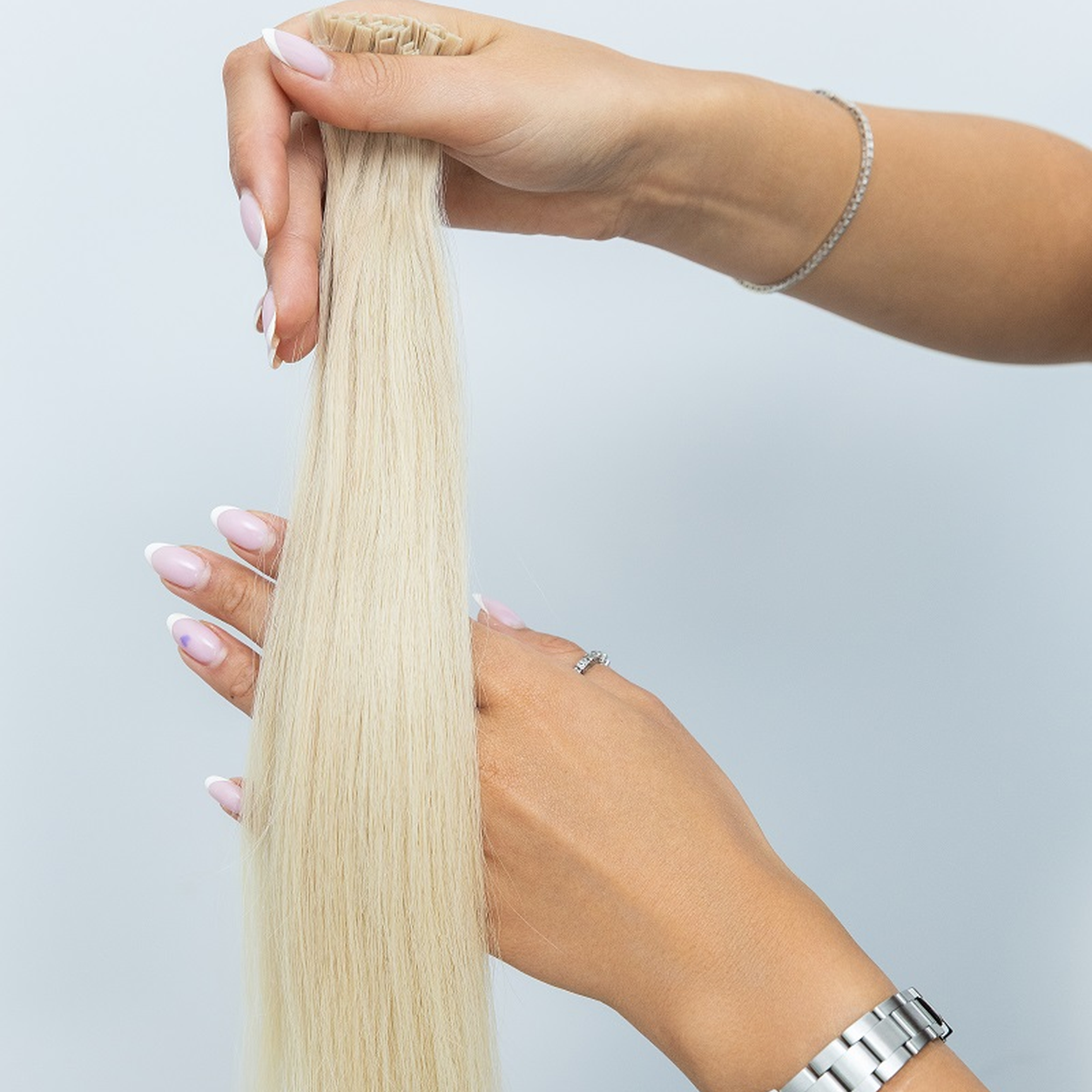
Pricing confusion is one of the most common reasons consultations stall before they convert. Clients comparing salons by a single headline number are usually comparing apples to oranges, because that number rarely represents the same scope of service. Here's the structure broken down plainly.
The three line items most quotes are actually made of
1. The hair itself
This is sold separately from labor in most salons and varies the most — driven by hair grade (virgin vs. processed Remy vs. lower-grade alternatives), length, texture, and color. This is the line item most affected by everything covered in our sourcing guides — origin, processing history, and donor scarcity all factor in here.
2. Initial installation
Covers custom placement, sectioning, and the technical application work itself. A color-match consultation is often included or charged as a small add-on if the client's natural color requires custom blending across multiple wefts.
3. Move-up / maintenance appointments
Recurring every 6–8 weeks for tape-in and similar semi-permanent methods. This is a separate line item from the original hair cost — clients sometimes mistakenly assume the upfront price covers maintenance indefinitely, which is worth clarifying at the very first consultation.
Why "cheaper" quotes often cost more over a year
A lower upfront price frequently means lower-grade hair that needs full replacement within a few months, rather than quality hair that gets reinstalled across several move-up cycles over 12–24 months. When clients price-shop on the headline number alone, they're often comparing a one-time cost against a recurring one without realizing it.
How to present this without sounding defensive
Break the quote into the three components above, explicitly, before the client asks. Most price objections come from not understanding what's bundled — once it's itemized, the conversation shifts from "is this expensive" to "which tier of hair makes sense for my budget and how I want to wear it."